How Google Ranks Websites (Complete Guide)
Google ranks websites based on relevance, quality, authority, and user experience. Its goal is simple: show users the most helpful and trustworthy results. When someone searches for information, products, or services, the search engine analyzes millions of pages and displays the best options first.
If your website appears on page one, you gain visibility, traffic, and leads. Otherwise, your competitors receive those visitors instead. Because of this, understanding ranking factors helps businesses grow faster online. This guide explains how search engines evaluate pages and how you can improve your position.
How Google Search Works
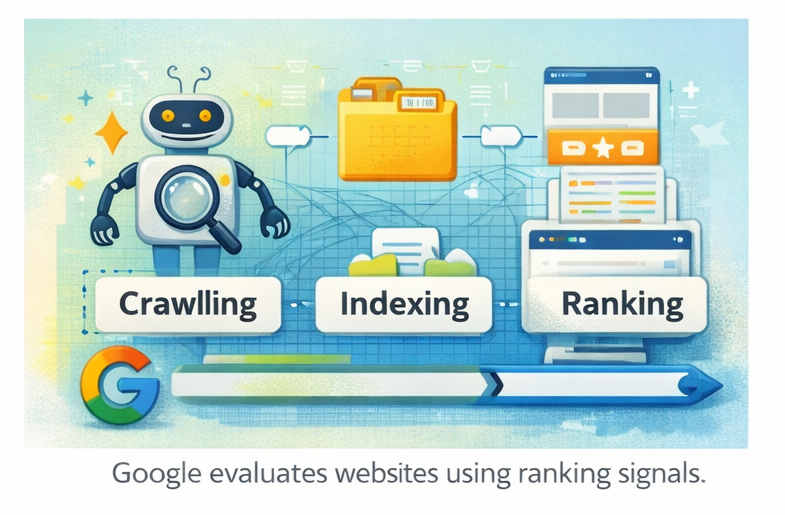
Search engines use automated programs called crawlers to discover and analyze websites. These crawlers scan pages, read content, and store information in Google’s index. After indexing, the algorithm evaluates each page based on multiple ranking signals.
Google ranking follows three key steps:
-
Crawling – discovering new and updated pages
-
Indexing – understanding and storing content
-
Ranking – showing the most relevant results
Because Google processes billions of pages, it relies on complex algorithms to deliver accurate results.
Learn more directly from Google
Key Factors That Influence Rankings
Google evaluates hundreds of signals. However, some factors have a stronger impact on visibility and performance.
Content Quality and Relevance
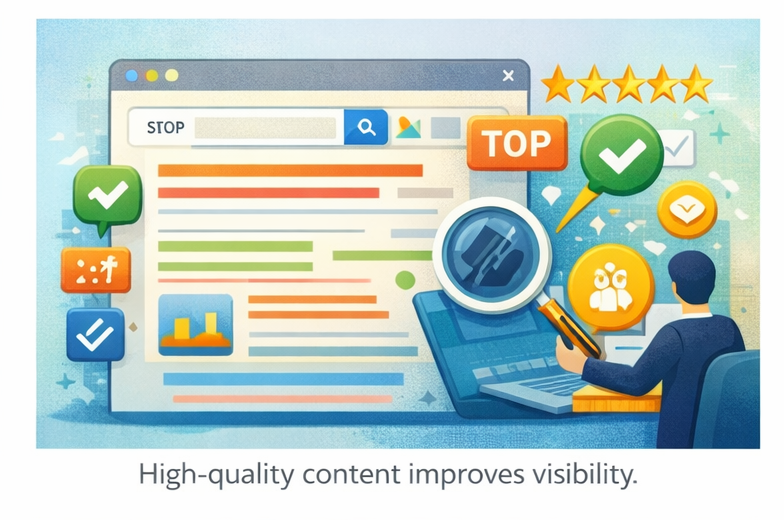
High-quality content plays the most important role in ranking performance. Search engines prioritize pages that answer user questions clearly and accurately. In addition, well-structured content improves readability and engagement.
Strong content should:
-
Provide useful and original information
-
Match user search intent
-
Use clear headings and structure
-
Solve real problems
Because helpful content improves user satisfaction, it increases ranking potential.
If you need expert help, explore our
SEO services
to improve website performance.
Keyword Usage and Topic Relevance
Keywords help search engines understand page topics. However, natural usage works best because overuse can reduce quality.
An effective keyword strategy includes:
-
Using keywords naturally in content
-
Adding keywords to headings and titles
-
Avoiding keyword stuffing
-
Focusing on user intent
For example, our
keyword research service
helps identify valuable search opportunities.
Website Authority and Backlinks
Backlinks act as trust signals. When trusted websites link to your pages, search engines see your website as more credible. As a result, authority improves and ranking potential increases.
High-quality backlinks help:
-
Improve domain authority
-
Increase trust and credibility
-
Strengthen ranking performance
According to Moz
Because authority reflects trust, websites with strong backlink profiles perform better.
User Experience and Website Performance
User experience also plays a critical role. Google prefers websites that load quickly and function smoothly across devices. Additionally, mobile-friendly design improves accessibility.
Important experience factors include:
-
Fast loading speed
-
Mobile responsiveness
-
Easy navigation
-
Secure HTTPS connection
Test your website performance here
Our
technical SEO service
helps improve technical performance.
How Google Evaluates Content Quality
Search engines use E-E-A-T principles:
-
Experience
-
Expertise
-
Authoritativeness
-
Trustworthiness
These factors help identify reliable websites. For instance, expert-written content builds trust and improves ranking potential. In addition, accurate information strengthens credibility.
Because trust signals influence ranking decisions, businesses benefit from professional optimization.
Technical SEO and Ranking Performance
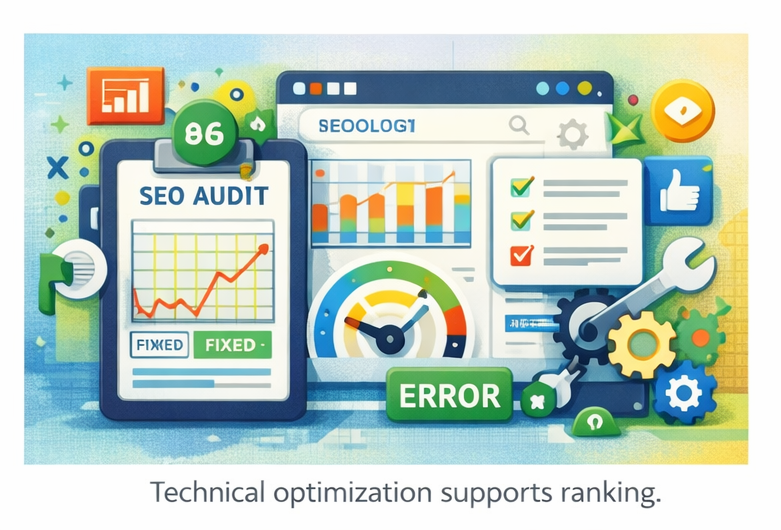
Technical structure ensures search engines can crawl and index your website properly. Without proper technical setup, ranking improvements become difficult.
Technical optimization includes:
-
Fixing crawl errors
-
Improving page speed
-
Enhancing mobile performance
-
Creating a clean website structure
A professional
SEO audit
can identify technical issues.
Google explains technical optimization here
On-Page Optimization Signals
On-page optimization helps search engines understand page content clearly. In addition, proper structure improves user experience.
Important on-page elements include:
-
Optimized page titles
-
Clear meta descriptions
-
Proper heading structure
-
Internal linking
-
Image optimization
Our
on-page SEO service
helps improve website relevance and clarity.
Because structure improves understanding, optimized pages perform better.
Content Freshness and Updates
Search engines prefer updated and relevant content. Therefore, regularly updating pages improves ranking potential.
Updating content helps:
-
Maintain accuracy
-
Add new information
-
Improve ranking stability
Because search trends evolve, fresh content performs more effectively.
User Behavior Signals
Search engines analyze how users interact with websites. Positive engagement signals indicate useful content.
Important behavior signals include:
-
Higher click-through rate
-
Longer time on page
-
Lower bounce rate
Because user engagement reflects content quality, helpful pages rank higher.
Local Search Ranking Factors
Local optimization helps businesses appear in local search results. This is especially important for service-based businesses.
Local ranking depends on:
-
Google Business Profile optimization
-
Location relevance
-
Customer reviews
-
Local keyword targeting
Our
local SEO service
helps improve local visibility.
Common Mistakes That Affect Rankings
Many websites struggle due to avoidable issues. Fortunately, fixing these problems improves performance.
Avoid these mistakes:
-
Publishing thin content
-
Ignoring technical optimization
-
Poor site structure
-
Low-quality backlinks
Because quality influences ranking, proper optimization improves results.
How Long Ranking Improvements Take
Ranking improvements require time and consistency. Most websites see gradual progress over several months.
Typical timeline:
-
Month 1–2: Technical improvements
-
Month 3–4: Ranking progress begins
-
Month 6+: Traffic increases significantly
Because authority builds gradually, long-term optimization delivers sustainable results.
How Professional SEO Improves Performance
Professional optimization improves website performance using proven strategies. In addition, expert guidance helps avoid costly mistakes.
Professional services help:
-
Identify ranking issues
-
Improve content quality
-
Optimize website structure
-
Build authority safely
Visit
https://jesminbestseoexpert.co.uk/
to learn more.
Because expert strategy improves efficiency, professional SEO delivers stronger long-term growth.
Final Thoughts
Search engines rank websites based on relevance, authority, and user experience. Pages that provide valuable content and strong technical performance achieve better visibility. In addition, trust and authority improve ranking stability.
Consistent optimization, quality content, and technical improvements help websites achieve higher positions. As a result, businesses gain more traffic, leads, and long-term growth.
Because organic search drives most online traffic, investing in SEO remains essential for sustainable success.